
When a severe Midwest storm tears through the Metro East, BCS Tree Service answers the call. Literally — call (618) 319-4369 any hour of the day or night and a real person from our Troy-based team will respond. We don’t have an answering service. We don’t make you wait until Monday morning. We pick up, we show up, and we get to work.
For over 35 years, BCS has been the team that Madison County and St. Clair County homeowners count on when a massive oak falls across a roof, a hanging limb threatens a car in the driveway, or a derecho drops an entire tree line on a property. Our ISA-certified arborists assess storm damage safely and systematically, prioritizing immediate hazards before moving to cleanup.
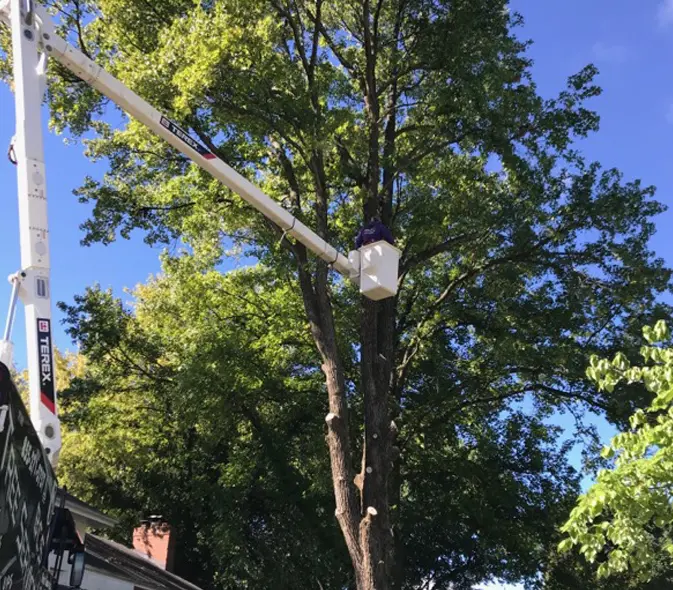
The Metro East sits in a climatically active corridor between the Mississippi and Illinois Rivers. Our crews deal regularly with:
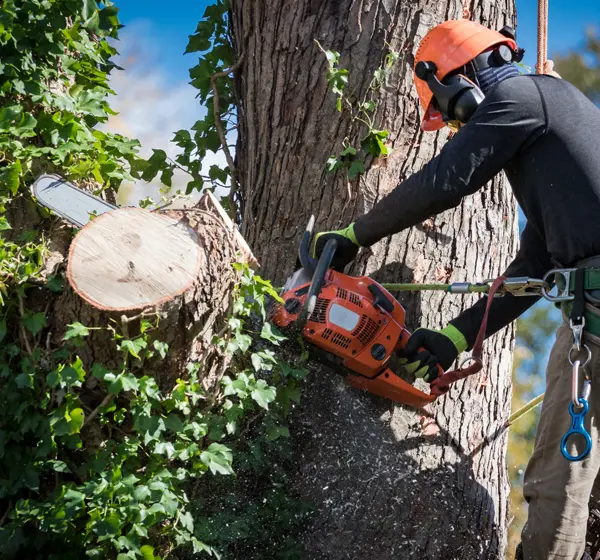
A hanging 30-foot limb isn’t just an inconvenience — it’s a potentially fatal hazard. Every hour it stays in place is another opportunity for it to fall on a person, a vehicle, or a structure. Secondary storm damage (limbs that fall through weakened roofs, root plates that shift after initial impact, trees that lean progressively after wind loading) accounts for a significant portion of property damage following storms. The sooner the hazard is addressed, the less total damage you sustain.
That’s why our 24/7 availability isn’t just a selling point — it’s a genuine safety commitment to the communities we’ve served since 1990.
Storm-related tree damage is often covered under standard homeowner’s insurance policies, particularly when trees fall on structures, vehicles, or fences. BCS can assist with:
Note: Removal of a tree that simply fell in your yard without damaging a structure is typically not covered. We’ll help you understand the distinction and what documentation you’ll need.
| Pricing Factor | How It Affects Your Quote |
|---|---|
| Emergency vs. Scheduled | 24/7 emergency response commands a premium over scheduled removal due to after-hours mobilization and priority dispatch. |
| Hazard Complexity | Trees on roofs or structures require specialized techniques and additional safety measures, affecting cost. |
| Tree Size & Number | Larger trees or multi-tree storm events require more crew time, larger equipment, and more hauls. |
| Debris Volume | Storms often spread debris across a wide area. Total cleanup scope affects time and cost. |
| Insurance Documentation | Standard documentation is included. Formal arborist reports for complex claims may carry a separate fee. |
| Access Challenges | Soft, saturated ground post-storm and restricted access increase time and equipment needs. |
| Time of Day / Weekend | After-hours, weekend, and holiday response may carry a modest premium for emergency dispatch. |
| Follow-Up Services | Many emergency calls result in follow-up stump grinding, pruning, or replanting — bundled for savings. |
A: Yes. Call (618) 319-4369 any time. We don’t forward to an answering service — you’ll reach someone from our team who can dispatch help. We’ve answered calls in the middle of the night during ice storms, tornado warnings, and severe derecho events.
A: Response time varies with storm severity — after a regional storm event, many customers need service simultaneously. We prioritize based on hazard severity (tree on a structure or blocking road gets priority over a clean fall into an open yard) and work as fast and safely as possible.
A: Illinois generally follows the principle that each property owner is responsible for damage to their own property. However, if negligence can be shown (e.g., you knew the tree was dead or diseased and didn’t address it), liability may be more complex. We recommend contacting your insurance company and an attorney for specific guidance.
A: No. Tree removal from a roof is extremely dangerous and should always be handled by trained professionals with the proper equipment and experience. Trees resting on structures are under enormous tension, and moving them incorrectly can cause catastrophic additional structural damage or serious injury. Wait for our professionals to assess and safely remove it.
A: Coverage depends on your policy and whether the tree damaged a structure (home, fence, garage, or vehicle). Most policies cover removal when the tree damaged an insured structure. A tree that fell into an open yard without structural damage is typically not covered. We’ll help you document everything for your claim.
A: Yes. BCS handles commercial, HOA, and multi-property storm cleanup. We have the crew size and equipment for large-scale response. Contact us directly to discuss scope and scheduling.
A: First, get everyone safely out of the affected area of the home. Call your insurance company to open a claim. Then call us at (618) 319-4369 for emergency removal. Don’t attempt to remove the tree yourself or allow anyone under the impacted area — unsupported sections of roof can collapse when the tree is moved without proper rigging.
A: No. A partially attached, hanging limb is one of the most dangerous situations in tree work. Wind, additional rain weight, or even vibration from traffic can bring it down without warning. This is a priority emergency — call us immediately.
A: Yes. A pre-storm arborist assessment can identify trees and limbs that are likely failure points before severe weather arrives. Addressing these proactively is far less expensive — and much safer — than emergency removal after the fact.
A: Absolutely. Storm debris cleanup is not time-sensitive on our end. We handle cleanups whether the storm happened last night or last year.