
There’s a big difference between “cutting back” a tree and pruning it properly. An improper cut — or the wrong cut at the wrong time of year — can invite disease, weaken structure, and shorten the life of a tree you’ve spent years cultivating. At BCS Tree Service, we’ve been providing science-based, ISA-certified pruning and trimming throughout Madison County and the Metro East since 1990. We never top trees, we never leave stubs, and we never take shortcuts.
Whether you have a towering white oak in Glen Carbon that needs structural thinning, a row of arborvitae along your O’Fallon fence line that’s grown out of control, or fruit trees in your Edwardsville backyard that need a rejuvenation pruning, our certified arborists bring the knowledge to do it right the first time.
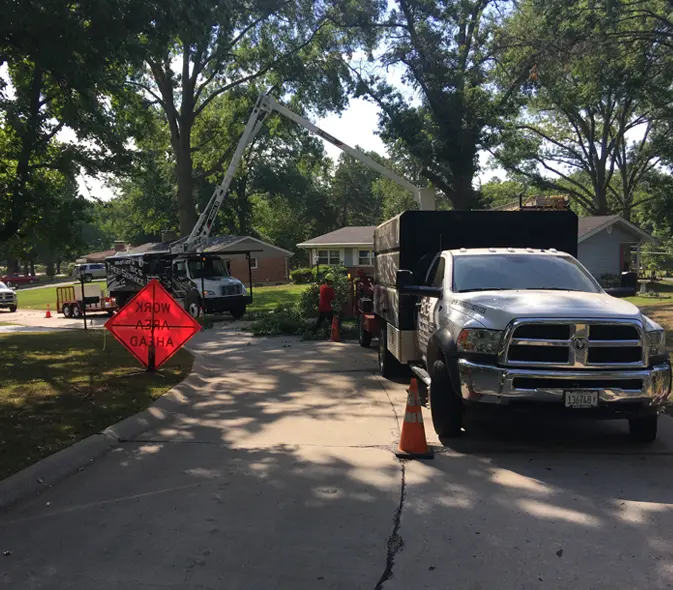
Illinois weather puts enormous stress on trees. Between summer humidity that breeds fungal disease, spring ice storms that snap limbs, and hot dry spells that stress root systems, Metro East trees need all the structural support they can get. Proper pruning:
The dormant season is the ideal window for major structural pruning of oaks, maples, elms, and most hardwoods. With leaves off, our arborists can see the entire branch structure and make precise decisions. Dormant pruning also eliminates the risk of attracting Emerald Ash Borers and other pests that are drawn to fresh pruning wounds during active season.
Spring is excellent for light corrective pruning after winter storm damage. However, we follow strict Oak Wilt protocols in spring — oak pruning is avoided from April through June when the fungal mat-forming beetles are most active. Flowering trees like crabapples and serviceberries are best pruned immediately after they bloom.
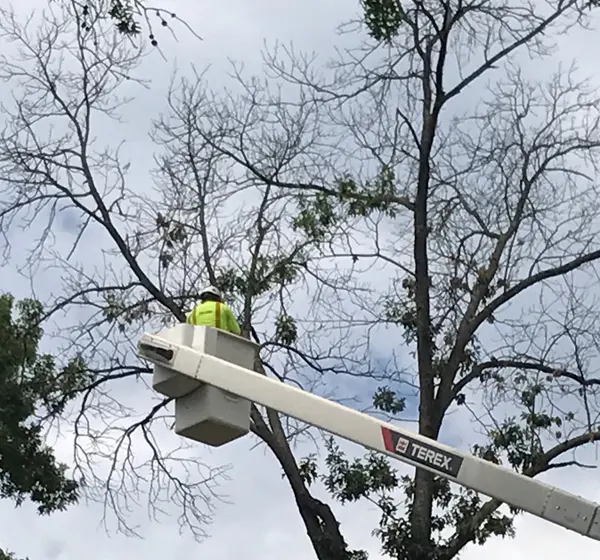
Summer is ideal for shaping, hazard-limb removal, and health maintenance pruning. Our arborists also use summer visits to spot early signs of Emerald Ash Borer, Oak Wilt, and other pest or disease issues while leaves are on.
We generally discourage heavy pruning in fall — fresh wounds don’t seal before winter, and some fungal pathogens spread via spores in autumn. Light dead-wooding is acceptable; major structural work is best deferred to winter.
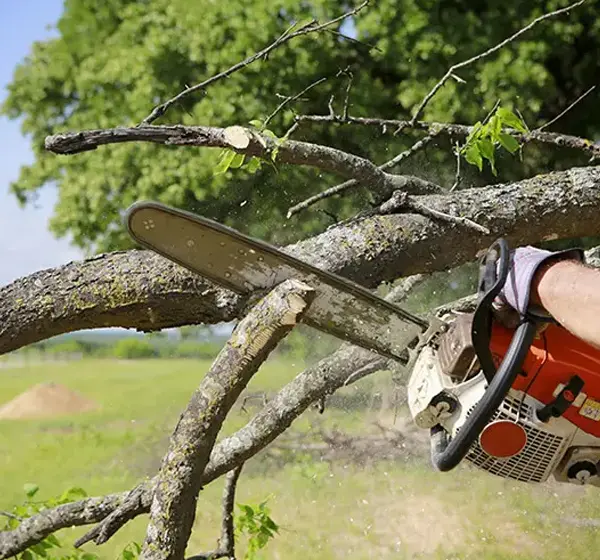
We NEVER “top” trees. Topping — the indiscriminate cutting of main stems and large branches — destroys tree structure, creates massive wounds that rarely seal properly, and leads to rapid decay. It’s rejected by every professional arboricultural organization. If another company suggests topping your tree, call us instead.
Overgrown hedges and shrubs can make even a beautiful Metro East property look neglected. Our shrub trimming services include:
| Pricing Factor | How It Affects Your Quote |
|---|---|
| Tree Size & Canopy Spread | Taller or wider trees require more crew time and may require lift equipment. Large mature trees take considerably longer than young specimens. |
| Number of Trees / Shrrubs | Volume discounts apply when multiple trees or hedgerow footage are serviced in one visit. |
| Severity of Overgrowth | Trees or shrubs that haven't been pruned in many years require more time and multiple cuts to restore structure safely. |
| Species & Seasonal Timing | Some species, such as oaks and elms, have disease-driven seasonal restrictions. Rush pruning outside ideal windows may carry a small premium. |
| Proximity to Structures | Working around power lines, rooflines, or fences requires additional care and time. |
| Debris Removal | All brush and small limbs are hauled away. Volume affects haul time and cost. |
| Follow-Up Treatments | If our arborist identifies disease or pest issues during pruning, treatment recommendations may be provided separately. |
| Maintenance Program Discount | Scheduling regular annual or seasonal pruning as a maintenance agreement typically reduces per-visit cost. |
A: Most mature shade trees benefit from a professional pruning every three to five years. Young trees may need annual structural pruning. Ornamental trees and shrubs often benefit from yearly shaping. Our arborist can set a personalized schedule during your free estimate.
A: We strongly recommend against pruning oaks between April 1 and July 1 in Illinois. This is peak season for the beetles that spread Oak Wilt fungus — they’re attracted to fresh pruning wounds. If you must prune an oak in spring, the wound should be immediately sealed with a wound dressing. We follow all ISA Oak Wilt protocols.
A: No. Topping destroys the tree’s natural branching architecture, creates wounds that rarely seal, causes explosive but weakly attached regrowth, and dramatically shortens a tree’s lifespan. We never top trees and will advise against it if another company suggests it.
A: It depends on the technique. Heading cuts (cutting branch tips) stimulate dense regrowth below the cut. Thinning cuts (removing whole branches back to the collar) encourage stronger, more spread-out growth. Our arborists choose the technique that aligns with your goals.
A: Not necessarily. Dead-wooding (removing dead branches while retaining the living crown) is often a cost-effective alternative to full removal. Our arborist will assess whether the tree’s overall structure and health make preservation worthwhile.
A: Absolutely. Ornamental trees like crape myrtles, dogwoods, Japanese maples, and redbuds are a specialty. We prune them to enhance their natural form — never into the flat-topped \”crape murder\” style that weakens them.
A: Yes, complete debris removal and cleanup is included in every pruning job. We haul away all brush, rake the area, and leave your property looking better than when we arrived.
A: We can prune branches near residential service lines, but we always coordinate with Ameren Illinois for work near transmission lines. We have experience facilitating those disconnections — just like we did for one of our Glen Carbon customers when we coordinated with Ameren to safely remove a large tree.
A: In most cases, hard renovation pruning can restore even severely overgrown shrubs. Exceptions include plants that are diseased, structurally dead, or have lost too much interior live wood. Our arborist will give you an honest recommendation on whether renovation or replacement makes more sense.
A: Yes. Many of our commercial and residential customers set up seasonal maintenance programs that include pruning, trimming, and arborist check-ups. Regular maintenance programs typically offer better rates than one-off visits and keep your trees at their best year-round.